THE CODEX JOURNAL
Buying the Tools Before Meeting the Work
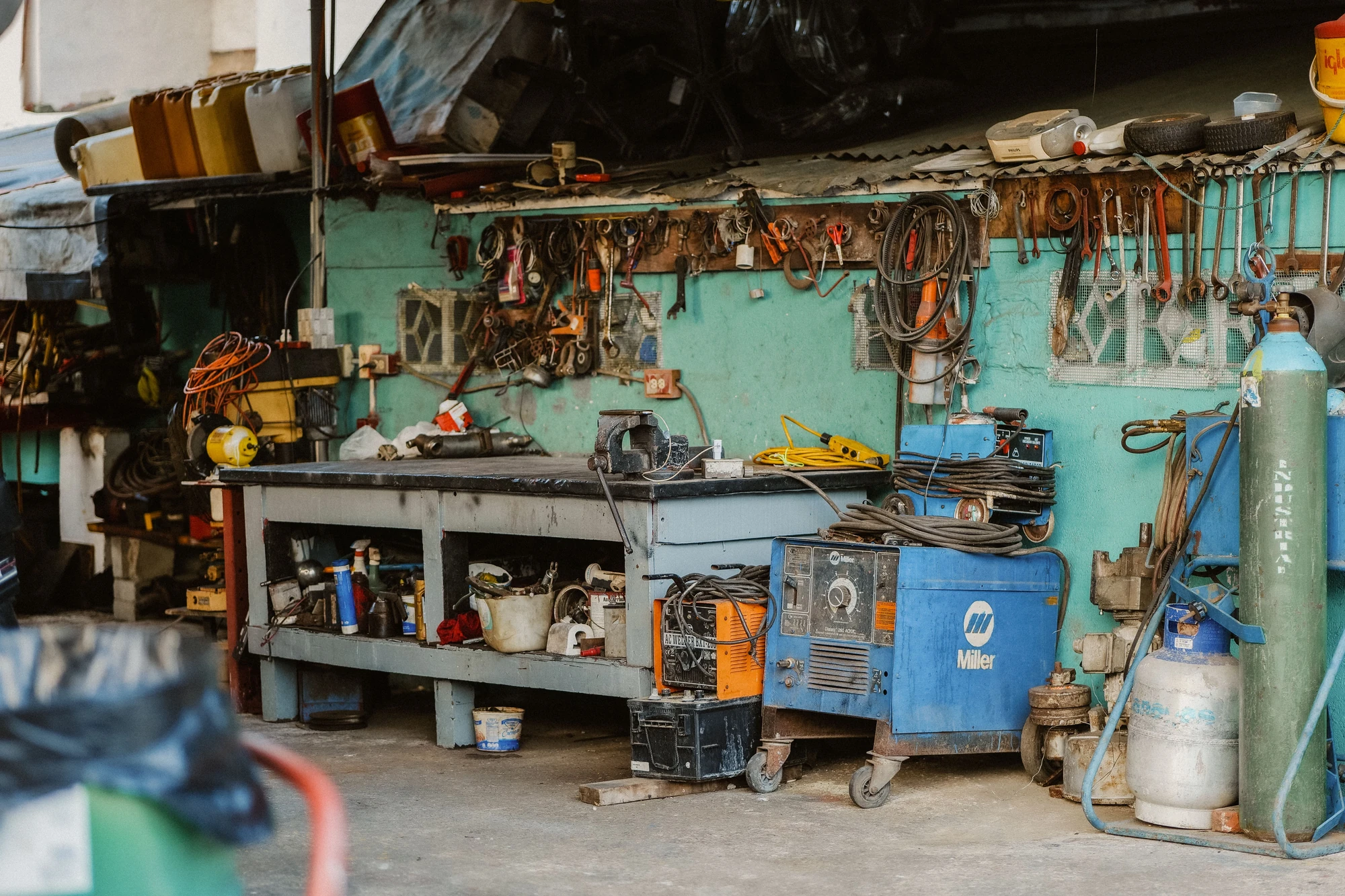
Illustrative stock photograph · Photo: Luis Quintero / Pexels. People pictured are not the cases described and do not endorse the books. Photo licence.
Reading tools & contents
A tool can offer two different futures
A person wants to learn a craft. Before spending much time practising, they research the camera, the instrument, the workstation or the specialist software. Each purchase promises an easier route into the work. It also offers something more immediate: the ability to look at their surroundings and recognise the life of someone who already belongs to the craft.
This appeal is not foolish. Objects can make an intention tangible, and unsuitable tools can genuinely obstruct learning. The difficulty is distinguishing practical support from symbolic completion. Owning the equipment provides an experience now. Competence requires an encounter with tasks whose demands remain after the box is opened. The two rewards arrive on different schedules and should not be confused.
The issue is not mainly money already spent, nor a comparison with somebody else's success. It is the purchase of an anticipated identity before the practice has become known. The buyer may be trying to answer what kind of person they will be through what kind of equipment they possess. A useful decision starts by asking which concrete difficulty the object will help with, and whether that difficulty has yet been encountered in the work itself.
Research can become a place where judgement feels safer
Comparing equipment has a particular appeal: the questions often seem answerable. Features can be listed, specifications compared and reviews collected. Practice is less controlled. A drawing may remain weak without an obvious explanation. A musical phrase may expose a limitation that cannot be solved by choosing correctly once. Research can therefore offer a feeling of progress while postponing a more uncertain kind of effort.
This does not make research unnecessary. A badly matched purchase can create avoidable frustration. The distinction concerns its function in the sequence. Is research resolving a question that blocks the next task, or producing another question each time the task approaches? The buyer can keep moving towards a decision while remaining far from the activity they intended to begin.
A useful test is whether the information changes what will be done in the next actual session. If two options both allow that session, more comparison may serve a different purpose. The unresolved craft is being replaced by a solvable shopping problem. Recognising that substitution does not require an immediate purchase or a dramatic vow to stop researching. It asks the person to return the equipment decision to the scale of the work it is meant to support.
Borrow the craft’s question before borrowing its costume
A craft is not defined only by its tools. It contains recurring judgements: what to notice, what to correct, what to leave alone and what counts as a convincing result. A beginner may know the visual setting of the craft long before encountering those questions. They can assemble a recognisable workspace without knowing what decisions will actually occupy them there.
The practical alternative is to meet a representative task. Write a short piece, prepare a simple object, record a small scene or make a limited design. The aim is not to produce proof of talent. It is to discover what the activity asks. Which decisions are interesting? Which parts are unexpectedly tedious? Where does the current equipment genuinely interfere?
This encounter can change the desired purchase. The most attractive object may solve a problem that rarely arises, while an unglamorous aid addresses a difficulty encountered immediately. It can also reveal that the person enjoys a different aspect of the craft from the one imagined. Equipment becomes more useful when it follows a developing understanding of the work. The workspace can then express a practice being learned, rather than serve as a convincing costume for a role still largely unknown.
A purchase can remove friction without removing apprenticeship
Some purchases make a real difference. A reliable tool may prevent interruptions, a suitable instrument may make an action possible, and a usable workspace may allow attention to remain on the task. Refusing every improvement in the name of authenticity can become its own performance. There is no special virtue in avoidable obstruction.
Yet removing friction is different from removing the need to learn. A tool can make an operation easier while leaving the judgement behind it untouched. The person still has to decide what they want, recognise a weak result and work through a mistake. Advertising or personal fantasy may blur this distinction by suggesting that the object supplies the authority of the person using it.
The relevant question is therefore which part of the difficulty should disappear. If a tool removes repetitive setup that interrupts practice, it may be helpful. If the buyer expects it to remove uncertainty about whether the work is good, the expectation deserves scrutiny. Some uncertainty belongs to the activity rather than the equipment. Buying well can support apprenticeship; it cannot convert apprenticeship into an unnecessary stage that belongs only to people who chose less impressive objects.
Name the first decision the new tool will improve
A desired purchase becomes easier to evaluate when its proposed contribution is specific. Instead of saying it will make the work professional, identify the first decision or action it will improve. Will it allow a particular material to be handled, make a repeated operation more reliable or provide information needed for an actual task? The explanation should be understandable without appealing to the owner's desired identity.
This test does not require technical certainty from a beginner. Someone may reasonably rely on a knowledgeable recommendation. Even then, they can ask how the tool relates to the kind of work they are about to attempt. A recommendation suitable for an established practitioner may assume habits and needs the beginner does not yet share.
A vague answer is not proof that the purchase is wrong. It indicates that its practical role remains uncertain. The person may still choose it for pleasure, design or curiosity. Those are real preferences. Honesty improves when they are named rather than disguised as indispensable preparation. A beautiful object can be worth owning without being described as the thing that will finally make the owner capable of doing work they have not yet met.
Do not turn preparation into an entrance requirement you invented
A person may delay beginning until the workspace is complete. They need the right desk, software, lighting, storage and sequence of courses. Some conditions may genuinely matter. Others become self-imposed requirements that protect the imagined craft from an imperfect first encounter. The activity remains attractive partly because it has not yet been attempted under ordinary conditions.
The useful question is not how little one can spend or how quickly one can start. It is which conditions are truly necessary for the next meaningful encounter. A craft involving particular materials or risks may require guidance and suitable equipment; pretending otherwise would be careless. But where the task can be attempted with available resources, a complete professional setting need not be the entrance fee.
The person can distinguish necessary preparation from preferred preparation and aspirational preparation. These categories may change as they learn. What matters is that the most expansive version does not silently govern the decision. Otherwise the person keeps purchasing permission from an imagined future self. The work becomes something they will be allowed to begin once their surroundings look as though they should already know how to do it.
Let use reveal the upgrade instead of demanding an identity first
An upgrade can be a response to repeated experience rather than a declaration of seriousness. The practitioner notices a recurring limit, understands its effect and considers a tool that addresses it. The purchase then has a relationship to a practice already taking shape. It does not need to prove that the owner is committed enough to belong.
This approach does not require waiting until frustration becomes unbearable. Nor does it guarantee a perfect purchase. It simply provides better questions: how often does the limitation arise, what alternatives exist and what changes after the upgrade? The answer may support buying, borrowing, renting where available or continuing with the current arrangement. The point is the fit between use and decision, not a universal rule against ownership.
The practitioner can also discover that a desired feature does not matter. That is useful knowledge, even if it makes earlier research feel less important. The craft is teaching the person what to value. A tool selected through that learning may look less impressive than the original fantasy and be more satisfying in use. Identity begins to follow the work instead of having to be fully furnished before the work can proceed.
Make room for pleasure without asking it to certify competence
People may enjoy equipment in its own right. They like well-made objects, technical possibilities or the process of collecting. Those interests are not automatically evasions. The difficulty comes when the pleasure of ownership is presented as evidence of craft competence, or when a collecting interest is repeatedly mistaken for a commitment to practise.
Separating the pleasures can reduce needless shame and self-deception. Someone may decide that they want a beautiful instrument even if they play casually. Another may realise that they prefer studying cameras to making photographs. Neither conclusion requires an accusation of failure. It allows the person to choose what they actually enjoy rather than continually promising a practice to justify purchases that serve a different interest.
There remains a practical responsibility to consider the purchase within one's own circumstances, but this essay does not supply a spending formula. Its question is about meaning. What is the object being asked to establish? A purchase becomes clearer when it can be enjoyed as an object or evaluated as a tool without carrying the impossible task of proving that its owner has become the imagined person associated with it.
HYPOTHETICAL CASE
The recording desk that postponed the first recording
Matei wants to make short audio essays. He spends weeks designing a recording desk, comparing microphones and researching software. Each decision produces another requirement. He imagines a quiet, professional space in which his thoughts will finally become clear. He has not yet tried to write and record a complete three-minute piece.
A friend asks which part of the first recording his preferred microphone will improve. Matei can describe its features but cannot name a problem he has encountered. He makes a simple recording using equipment already available. The sound is adequate for listening back. His main difficulties are choosing one argument, removing repetition and speaking at a pace that allows the listener to follow.
He keeps his interest in equipment but changes the purchase sequence. He works through several short essays and notices that a particular setup step repeatedly interrupts him. A modest change addresses it. He postpones another item whose main attraction is the professional image of the desk. Matei may still buy it later because he likes it. The difference is that he no longer expects the object to provide the judgement, clarity or sense of belonging that only meeting the work can begin to clarify.
Questions for review
- Which concrete task will the purchase make possible or easier?
- Are you researching a real obstacle or replacing an uncertain practice with a solvable shopping problem?
- What have you learned from use that changes the features you actually value?
- Can you enjoy owning the object without asking it to certify an identity or competence you are still developing?
Allow the work to be unimpressive while the learning is real
The first honest encounter with a craft can make an elaborate setup feel embarrassing. The equipment looks capable; the output does not. The person may respond by buying another tool, searching for a missing technique or avoiding the workspace. The gap is treated as evidence that preparation remains incomplete rather than as an ordinary part of meeting a demanding activity.
A more useful response separates the tool's capacity from the learner's present judgement. Having good equipment does not create an obligation to produce expert results immediately. The person can attempt tasks, notice limitations and decide what to learn without making every result a verdict on whether they deserve to own what they bought. This is not a guarantee that they will love the craft or become accomplished. It is permission to obtain accurate experience.
The central question is simple: does this purchase help me encounter the work, or help me avoid the uncertainty of encountering it? Sometimes the answer favours the tool. Sometimes it favours using what is already available. In either case, the craft becomes more accessible when equipment stops being a purchased certificate of identity and returns to being something a person can learn to use.
Follow the question further
Explore the next part in When a Paying Customer Is Also Your Friend. From the existing journal, Before an Interest Becomes Interesting: The Unimpressive Beginning develops a connected perspective.
Browse the full subject: Money & Financial Decisions.