THE CODEX JOURNAL
Put the Market Decision on the Clock
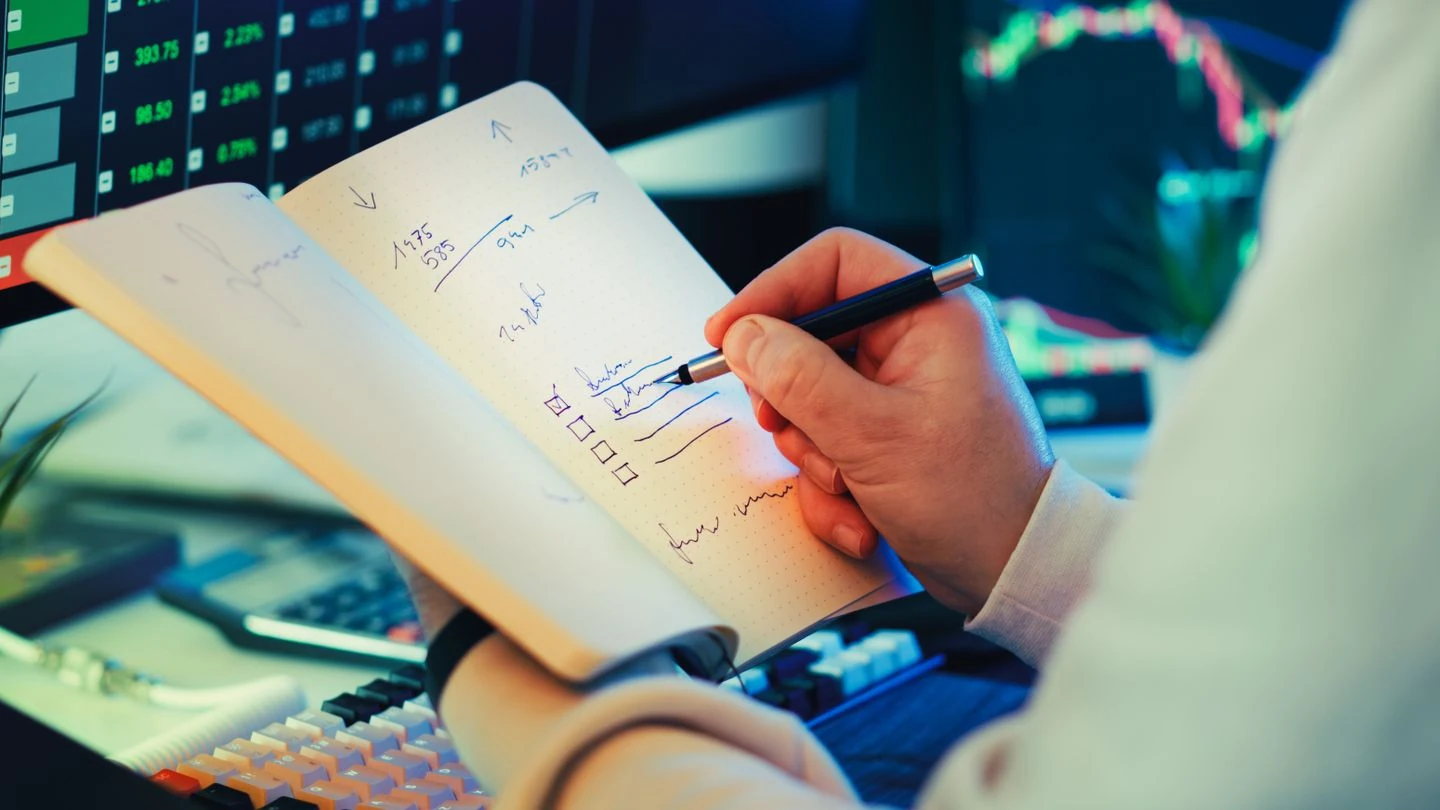
Illustrative photograph: Jakub Zerdzicki / Pexels · Licence
Reading tools & contents
The crucial line is when you knew
A journal entry made at the end of a session can look remarkably complete. The trader describes a breakout attempt, a change in conditions, a moment of hesitation and an eventual outcome. Read as a story, every detail belongs. Read as evidence of a decision, the record has a gap: when did each detail become available?
Imagine a price move that seems obvious shortly after it happens. A chart viewed later shows exactly where the acceleration began. At the time, the trader could have seen a partly formed candle, a conflicting signal and a screen with a delayed refresh. Without a timestamp for the observation and a note about what the chart actually displayed, the end-of-session reconstruction may accidentally give the earlier version of the trader access to the later chart.
Give four moments their own places
For a specific setup, it helps to distinguish the source time, the time you saw the information, the time you decided and, when relevant, the time of actual execution. A fifth field can hold the after-session review. These fields are worth keeping even when some are identical. When they differ, the difference often explains the question you should investigate.
Source time answers when a report was issued or which candle it refers to. Observation time answers when that report reached your attention. Decision time answers when you chose to act, wait or pass. Execution time answers when a real order was filled. The close of a candle and the receipt of an alert can be different moments; a market journal is allowed to show both.
Choose one timezone for the working view and retain the original timestamps when they are available. The aim is to make a later reconstruction possible, especially when you are comparing a chart, a record from an indicator and your own notes.
Record enough to reconstruct the screen
A long explanation written before every action can become its own distraction. A useful entry might be as short as: “14:12, observed retest, preceding candle close confirmed on my screen, waiting for next complete candle.” The point is to capture the decision state and a condition that can later be evaluated. If the next candle was still open, that fact belongs in the record. If the chart was stale, record the visible time rather than filling in later data.
A screenshot can support a note, but it helps to describe what you were looking at. A reader opening the image a week later may see ten features that did not cross your mind at the time. Give your future self the name of the relevant level or observation in words, with the image attached as evidence.
Hypothetical case: a report seen four minutes later
Omar reviews a paper-trading session and sees that a long signal was issued at 10:15. He wrote an observation at 10:19, when the price had already moved. His first review reads, “I should have entered when the indicator reported the setup.”
Checking the timestamps changes the question. At 10:15 he was checking a different chart and had not seen the report. At 10:19 the conditions on his screen were different. He records both moments and evaluates what was possible from the information he had rather than from the earlier hypothetical entry. If he wants to study why he saw the report later, that becomes a practical workflow question with its own evidence.
The same correction applies to a successful session. A favorable move after a source event does not supply a fill for a trader who entered later. The CFTC’s advisory on trading systems explains why hypothetical results built on assumed prices can differ from actual execution.
Let the review add a new layer
After the session, append the outcome. Add the costs and the actual fill if a trade occurred, or mark the record as a watch or simulation. You can add something you missed and explain why it matters. An appended note preserves the original observation and makes new understanding visible across time.
Look for a small pattern after several records. Do most differences come from a delay in seeing the information, from changing the plan after entering, or from execution assumptions? These are separate issues and demand different changes. A timestamped record protects the distinction long enough to learn from it.
Keep a place for decisions to wait
A journal that records only orders misses choices made before the order screen. Write down a wait or pass when the reason is specific enough to review. Perhaps you were waiting for a completed candle or for two sources to update. That decision can be assessed on the original condition even if the market later makes a move you would have liked to capture.
The record becomes more useful when it lets you replay what a person knew at a particular moment. That is the practical standard. Date and sequence the evidence so that a later chart can inform the review without quietly rewriting the decision.