THE CODEX JOURNAL
Sibling Fairness Is Not the Same as Identical Treatment
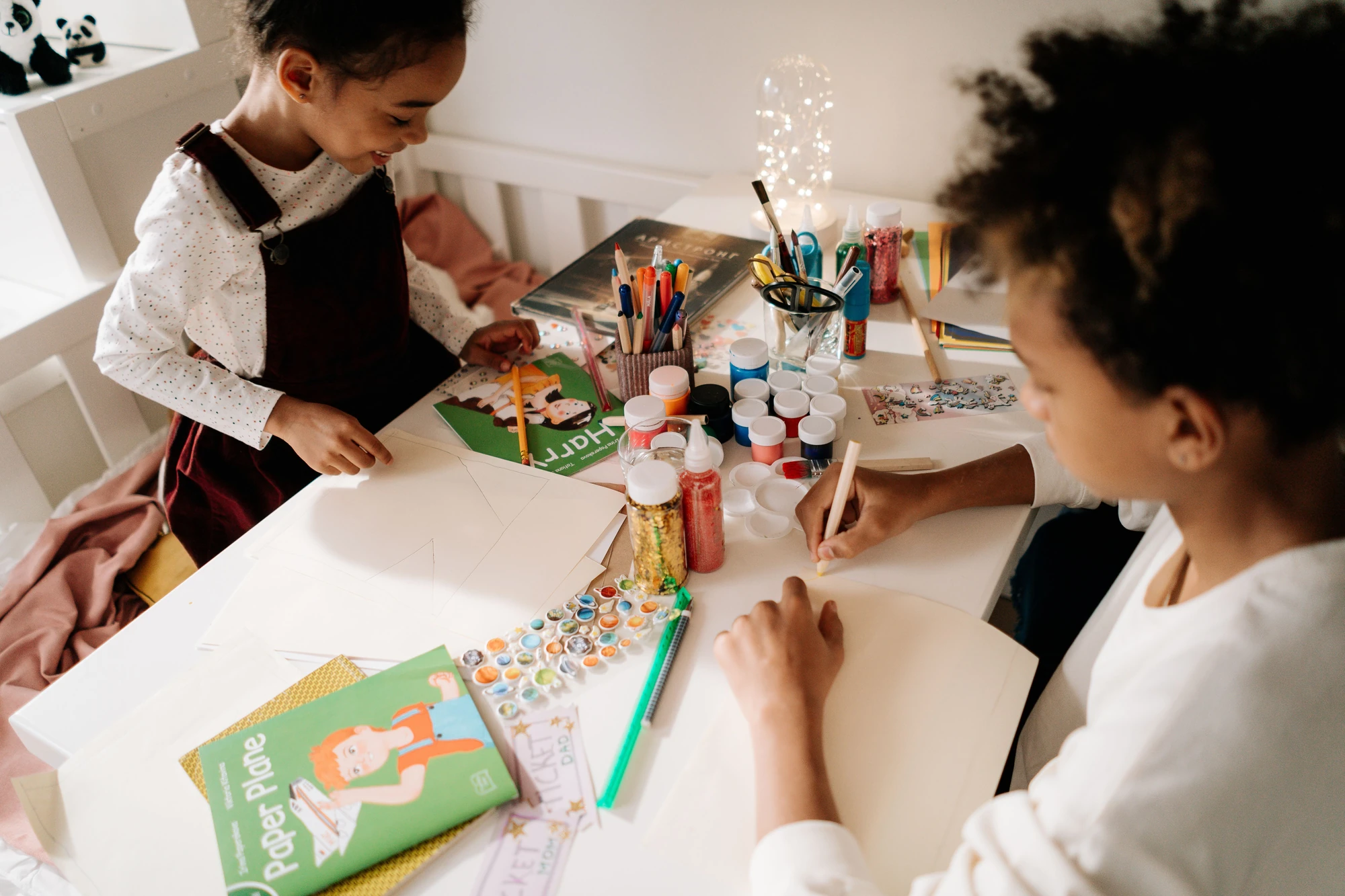
Illustrative stock photograph · Photo: cottonbro studio / Pexels. People pictured are not the cases described and do not endorse the books. Photo licence.
Reading tools & contents
Equal portions do not settle every question of fairness
One child receives more help, stays up later or has a different permission. The other protests that the family is unfair. Parents may respond by insisting that everything is exactly equal, even when the children can see it is not. A more honest explanation recognises that ages, needs and responsibilities differ while asking whether the reasons for those differences are consistent and understandable.
Fairness is not a mathematical promise that every child receives the same thing at every moment. Nor is it a convenient label for whatever the adult has already decided. It requires attention to needs, a coherent rule and a willingness to notice whether one child repeatedly carries the cost of making the household easier to manage.
Separate an individual need from a permanent family role
A child may need more support during illness, a transition or a particular difficulty. That does not require another child to become the one who never needs anything. Be careful when praise turns a coping pattern into an obligation: the easy one, the responsible one, the one who understands. A useful compliment should not remove permission to ask for care later.
Similarly, repeated conflict should not become a permanent identity assigned to a child. Describe behaviour and the support required. A child who struggled yesterday should not enter every new interaction already cast as the problem. Family roles can become self-confirming when adults interpret each event through a label rather than looking at what happened this time.
Explain the principle behind a different permission
An older child may have a later bedtime or a different responsibility. Explain the relevant reason without comparing worth. A permission connected to age, readiness or a specific circumstance should have an understandable basis. If the rule depends on a skill or responsibility, clarify what is required and how it will be reviewed.
Avoid inventing a reason after the fact simply to end the complaint. Children can notice when the explanation changes according to which answer is convenient. You can acknowledge an inconsistency and adjust it without surrendering parental responsibility. The goal is a household whose decisions can be explained, not an adult who must defend every previous decision as perfectly fair.
Do not require sharing as proof of affection
Some possessions, activities and spaces may be shared. Others can remain personal. Decide which is which before a conflict becomes a test of whether siblings love each other. A child can have a boundary around a valued object without being selfish, just as a shared household resource cannot automatically be claimed permanently by the child who objects most loudly.
Set practical expectations about asking, using and returning things. Where a child cannot yet manage a particular arrangement, provide appropriate adult help. The purpose is to make cooperation learnable. Forced generosity may produce a temporary exchange while teaching one child that another person’s disappointment overrides every personal limit.
Give attention without staging a contest for distress
If attention appears only after an argument, children may learn that ordinary requests are less effective than escalation. Look for opportunities to hear individual concerns before they become a crisis. This does not mean promising unlimited separate time. Small, reliable moments can be clearer than a large promise of equal attention that nobody can actually maintain.
Do not ask a child to prove that their need is greater than a sibling’s before taking it seriously. You can acknowledge a request while explaining that the response will happen later. A clear follow-through matters. Repeatedly saying later and forgetting can make the child feel that a stronger display is the only way to remain on the family’s agenda.
Keep children out of the parental accounting dispute
Adults may disagree about whether one child receives more money, leniency or protection. Discuss those differences with each other rather than recruiting children to provide evidence. A child should not become the witness who confirms that one parent is unfair or the beneficiary expected to defend a decision they did not make.
Where practical, agree a common explanation before presenting a consequential rule. This need not erase genuine differences between parents. It prevents a child from having to navigate an adult argument disguised as a decision about a toy, outing or bedtime. The adults retain responsibility for resolving the part of the problem that belongs to them.
Review fairness through patterns, not one isolated comparison
A single difference may be reasonable. A repeated pattern may deserve attention. Ask who is interrupted, who is expected to give way and whose frustration changes the plan. These observations are more useful than counting only the most recent treat. They also make it possible to address unfairness without promising that every future event will be identical.
A review can reveal that the child who appears independent has been overlooked, or that a child with additional needs requires a different arrangement that must be explained sensitively. Adapt to the actual circumstances and obtain professional input where appropriate. The framework is a way to ask better questions, not a universal formula for every family.
HYPOTHETICAL CASE
the older child is always asked to understand
Two siblings argue over a shared activity. The parent routinely asks the older child to let the younger one choose because it is easier to settle the evening that way. The older child begins refusing activities altogether. The parent initially interprets this as jealousy, but notices that being older has become a reason to lose a choice rather than a different responsibility with a clear limit.
They introduce a simple turn-taking arrangement for that particular activity. The younger child receives help tolerating a turn that is not theirs. The older child is no longer asked to demonstrate maturity by giving up every preference. Personal possessions remain separate from the shared activity, reducing another source of confusion.
There are still arguments, and the arrangement is adjusted when an activity genuinely requires a different approach. The improvement is that fairness now has an observable rule. The older child does not have to become more distressed to show that their preference exists, and the younger child is not permanently cast as unreasonable.
Questions for review
- Which difference has a clear reason, and which is merely convenient?
- Is one child expected to be permanently easy or responsible?
- What belongs to the household and what remains personal?
- Which repeated pattern deserves review beyond today’s argument?
Make the explanation as fair as the decision
Choose one recurring conflict and state the rule in terms both children can understand. Explain relevant differences without ranking their importance as people. Follow through, observe the result and revise the arrangement when new information shows that it does not work as intended.
Children do not need a family in which every experience is identical. They need reasons that are recognisable, opportunities to be heard and adults willing to notice a repeated imbalance. Fairness becomes more credible when it is something the household practises and reviews, rather than a word used to end the conversation whenever a child asks whose needs count.
Follow the question further
Explore the next part in Ending Screen Time Without Turning Every Transition Into a Battle. From the existing journal, Parenting develops a connected perspective.
Browse the full subject: Parenting, Repair & Autonomy.