THE CODEX JOURNAL
Two Trading Signals Are Not Always Two Independent Reasons
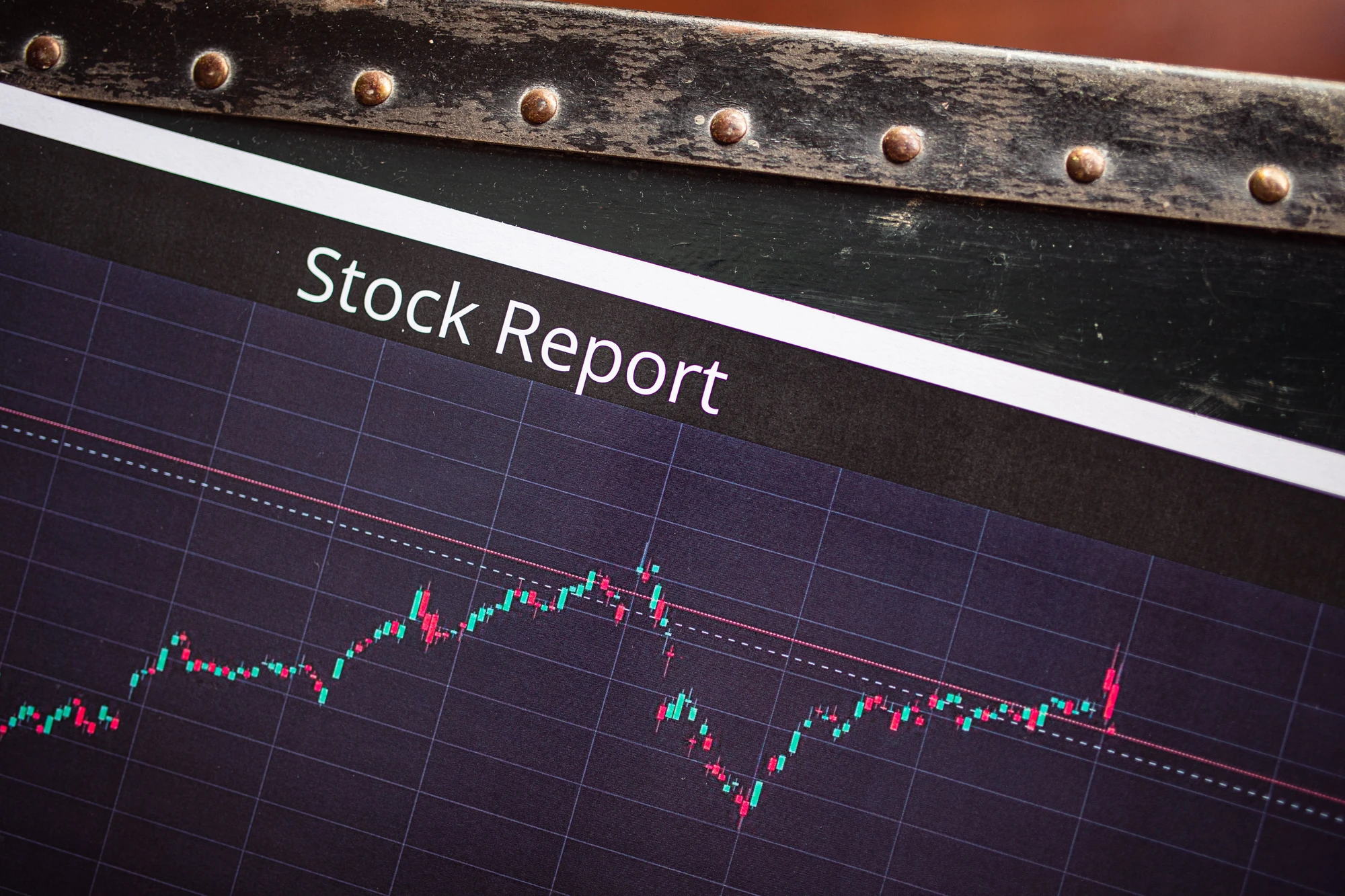
Illustrative stock photograph · Photo: RDNE Stock project / Pexels. People pictured are not the cases described and do not endorse the books. Photo licence.
Reading tools & contents
Agreement can repeat the same observation
A trader sees two indicators point in the same direction and describes the result as confirmation. The word can conceal an unanswered question: did the second tool add a different reason, or did it display another version of the observation that produced the first? Two agreeing outputs are not automatically two independent pieces of support.
The distinction is easiest to see in a deliberately simple hypothetical example. One display changes colour when a chosen price rises above a reference. A second display announces that the same price is above the same reference. Their visual forms differ, but the second statement has not brought another observation into the decision. Counting the displays as separate witnesses would inflate the description of what is known.
Real tools can have more complicated relationships. The invented examples that follow isolate a practical task: describing the contribution of each reason before using the number of agreeing reasons as evidence of strength. Shared inputs can still serve distinct questions, and apparently different inputs can remain poorly understood. The appearance of several confirmations should begin that inquiry rather than complete it.
Begin with the question each tool is supposed to answer
An indicator earns a place in a process by serving a defined question. What condition is it intended to describe? What would the trader do differently if its reading changed? Without those answers, adding a tool can become a way to increase visual reassurance without changing the reasoning that governs the next decision.
The questions do not have to be identical for the tools to overlap. One display might summarise a recent direction while another describes the strength of that same movement. They could still contribute useful distinctions, but the trader needs to explain those distinctions rather than infer them from different names. The relevant issue is the role of the information, not the number of panels on the screen.
A useful description is specific enough to reveal redundancy. This tool changes my assessment of one named condition says more than this tool confirms the setup. If removing the second display would leave the decision and its explanation unchanged, its current role may be presentation rather than additional evidence. That finding can simplify the process without making any claim about future trading results.
Trace inputs before counting witnesses
The CFTC’s advisory on online trading systems describes technical signals as mathematical analyses of trading data such as prices and volume. That description offers a useful starting question for any tool a person uses: what information entered it before the output appeared? The answer should come from its actual documentation, not from a guess based on the name.
In a hypothetical process, several outputs could depend on the same recent prices while applying different transformations. Another output might use an observation the first tools never considered. Those distinctions matter when explaining the collection of reasons, although they do not establish which combination is useful. Different inputs can still produce poor decisions; shared inputs can still be organised into a purposeful analytical process.
The practical discipline is to avoid claiming more separation than has been established. If the input relationship is unknown, unknown is an accurate description. Calling every additional output independent because the trader has not inspected its construction reverses the burden of explanation. The tool's visual authority should not substitute for knowing what kind of observation it can and cannot contribute.
A second timeframe is not automatically a second world
A trader may regard two charts as independent because they display different timeframes. Yet a single event can appear inside both views. A short movement may contribute to the longer interval in which it occurs. Seeing it twice does not necessarily mean that two unrelated developments have supported the same idea.
This does not make multiple timeframes meaningless. Their roles can be different: one might define a broad condition while another organises a more specific observation. The trader needs to state that relationship accurately. A hierarchy of views is an understandable structure. Calling each view a separate vote can obscure how they are connected and encourage a stronger conclusion than the explanation supports.
The same question applies to repeated news. Two summaries may derive from one announcement rather than two independent events. What matters is where the information originated and what changed between observations. A decision record that identifies those relationships gives the reviewer something concrete to examine. A count of agreeing charts, headlines or colours does not provide that account by itself.
Disagreement may be the first useful information
When a trader has collected tools mainly for reassurance, disagreement can feel like a defect that needs to be removed. They change a setting, add another display or search for a different interpretation until the screen becomes coherent again. The final agreement may then describe the trader's selection process as much as the condition being examined.
A purposeful process leaves room for tools to disagree because they ask different questions. In a hypothetical arrangement, one condition can remain present while another has not appeared. That difference might support waiting, rejecting the observation or reviewing an assumption according to the person's existing process. It should not automatically be treated as a technical inconvenience to be tuned away.
The useful inquiry is what the disagreement reveals. Was the expected relationship specified beforehand? Is one display answering a question the other does not address? Has the trader discovered a limit in their explanation? Such questions preserve uncertainty rather than treating a unanimous screen as the objective. Agreement becomes more informative when the process does not require it to be manufactured before every decision can feel acceptable.
The reason must be able to change the decision
An added condition can sound important while being allowed to affect nothing. The trader says that it must be present, but makes exceptions whenever the preferred opportunity appears without it. Later, when the condition happened to agree, it receives credit for confirming the decision. Its authority exists only when it supports what the trader already wanted to do.
A genuine decision role is different. The person can describe what happens when the condition is absent, ambiguous or contrary. That description does not have to be a universal rule for all traders. It has to be an honest account of the particular process being evaluated. Otherwise the added tool cannot be distinguished from a persuasive annotation added after the choice.
This is also why a list of reasons should preserve contrary information. If the journal records only outputs that agreed, a later reviewer cannot know whether the person faced a mixed picture or an unusually clear one. The issue is not whether the final trade gained or lost. It is whether the explanation faithfully records which observations were allowed to govern the decision when the outcome was still unknown.
A favourable outcome cannot establish independence
Suppose a hypothetical trade finishes well after three displays agree. The result can make the collection of displays feel validated as a unit. Yet the outcome does not reveal whether the tools supplied separate information, repeated one observation or included a condition that the trader would have ignored if it had disagreed.
These are different questions and require different records. One concerns what happened to a position under the costs and conditions included in the account. Another concerns how the reasons were constructed and used. A favourable result cannot retrospectively turn a shared input into an independent source. An unfavourable result does not prove that every additional observation was redundant.
Keeping those questions separate protects the review from becoming a search for an explanation that flatters the outcome. The trader can inspect how the decision was described without pretending that a single result establishes the quality of a method. Any broader performance claim would require an appropriately designed evaluation and honest account of its limits. A visually convincing example remains an example until that additional work has been done.
Remove one display on paper before adding another to the screen
A simple thought exercise can clarify the current process without placing another trade. Reconstruct an already recorded decision and cover one display. What information disappears from the written explanation? Which condition becomes unknown? Which action can no longer be justified under the process the person claimed to follow?
The answer may show a distinct contribution. It may also reveal that several panels have been supporting the same sentence. Neither finding should be exaggerated. The exercise does not measure predictive value or establish that a tool should be abandoned. It tests whether the trader can explain the tool's present role without leaning on its visual presence.
A second exercise reverses the question: what would a genuinely different observation need to tell us? The person may discover that the missing information is not another indicator at all. It could be a clearly recorded assumption, knowledge of how an input is produced, or a better account of the circumstances in which the existing reason is irrelevant. The next addition should answer a named gap rather than fill a space on the chart.
HYPOTHETICAL CASE
Three green panels and an unexamined relationship
Consider a hypothetical trader, Daniel, who uses three custom chart displays. He describes a setup as strongly confirmed whenever all three turn green. His journal records the three names but does not explain their inputs or what each one is meant to contribute.
During a review, Daniel reads the tools’ documentation. In this invented example, two displays transform the same recent price comparison, while the third summarises a longer interval containing that movement. The tools are not identical, but his description of three independent witnesses is unsupported.
Daniel rewrites the process on paper. He identifies the question assigned to each display and records what he would do when their readings differ. He also reconstructs an earlier observation with one panel hidden. The exercise reveals that one display had never changed his decision; he had used it mainly to make the screen feel complete.
He does not interpret this discovery as proof that a simpler chart will produce better returns. No new performance result has been established. He has corrected a claim about the evidence he was counting. His next review can distinguish an additional contribution from another rendering of an observation already present, which is a more precise starting point for any further evaluation.
Questions for review
- What question does each display answer that the others do not?
- Which inputs or observations are shared across the signals you count?
- What happens under your stated process when an additional indicator disagrees?
- If one panel disappeared, which part of the decision explanation would actually become unavailable?
Count contributions, not decorations
A screen can become more elaborate while the underlying decision remains unchanged. The trader has more colours, more labels and more language for confidence, but no clearer account of what would make the idea incomplete or wrong. Complexity has increased without establishing that the decision has received another independent reason.
The better standard is explanatory. Each tool has a question, an input, a stated relationship to the other tools and a defined role when it disagrees. Unknown relationships remain unknown rather than being renamed confirmation. This does not promise a profitable method. It makes the claims about the method more precise and therefore more open to examination.
Before counting the next signal, ask what it adds that has not already been said. The answer may be a useful distinction, a repeated observation or a gap in the trader's understanding. All three are worth knowing. A trading process becomes easier to examine when its apparent support can be traced to specific contributions, rather than to the reassuring sight of several displays telling the same story in different colours.
Follow the question further
Explore the next part in Before Moving From Demo to Real Money, Define What You Are Testing. From the existing journal, The Trading Journal That Records Decisions, Not Excuses develops a connected perspective.
Browse the full subject: Gold Trading & Decision-Making.
References and perspective
The references support the specific health, financial, parenting or administrative information identified in the text. The examples are hypothetical; the wider interpretation and reflection questions are editorial.
References checked on 10 November 2026.