 GABRIEL NICOLAEV — CYGURU
Money & Leadership
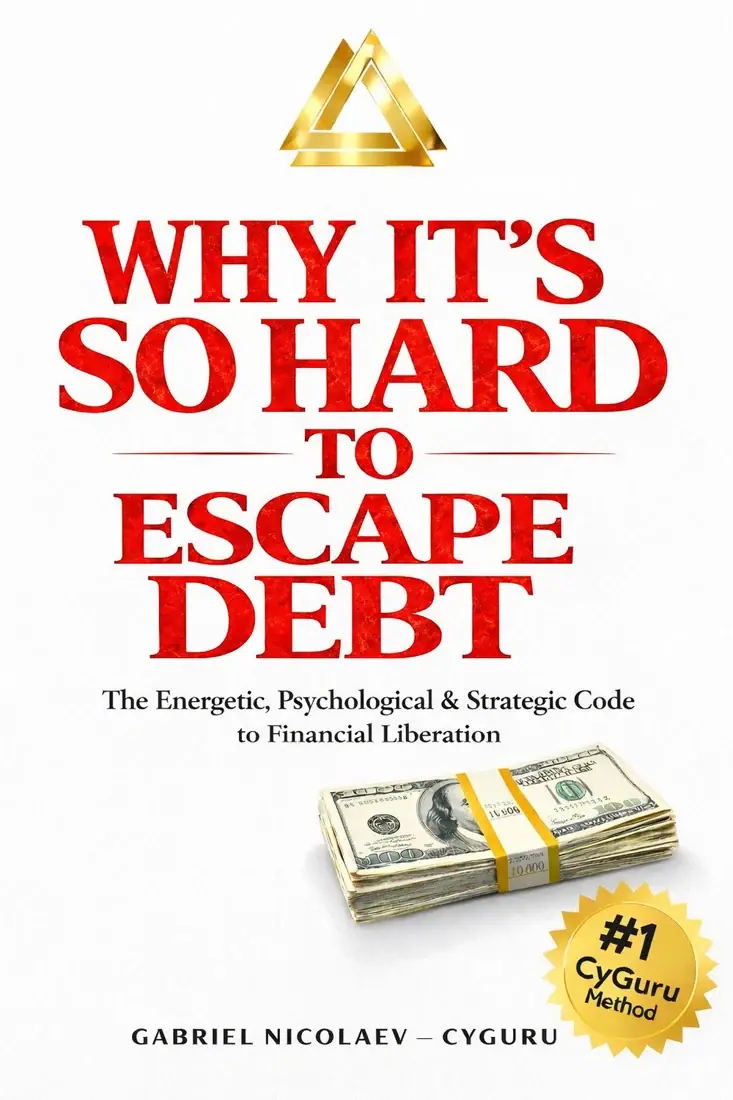
Why It’s So Hard to Escape Debt
Subtitled The Energetic, Psychological & Strategic Code to Financial Liberation , this book exposes why intelligent, capable people remain trapped in debt despite working harder, earning more, and following every “responsible” rule they were taught. It dismantles the myth that debt is a budgeting issue or a motivation problem and reveals the real architecture behind financial imprisonment: identity conditioning, obedience training, and strategic disempowerment.
Who this book is for
Readers questioning why working longer or earning more has not changed their financial obligations or sense of choice.
What you will explore
- The book's critique of learned financial roles and expectations
- The interaction of work, social pressure and personal agency
- The author's psychological and strategic interpretation of recurring debt
Why begin here
Begin here for a wider examination of the roles and arrangements surrounding debt. Compared with The Debt Trap Is Mental, this title puts more emphasis on conditioning, work structures and the assumptions that keep a familiar financial life in place.
A question to take into the book
Which obligation am I treating as unavoidable without examining how it began?
Is This Book for You?
This book examines the author’s view of decision pressure and recurring patterns around debt.
Questions you’ll explore
- How do continuing obligations shape everyday choices?
- Which patterns could persist after a balance changes?
Reading tools & contents
The Energetic, Psychological & Strategic Code to Financial Liberation
Why It’s So Hard to Escape Debt is not a financial book. It is a system interruption.
Subtitled The Energetic, Psychological & Strategic Code to Financial Liberation, this book exposes why intelligent, capable people remain trapped in debt despite working harder, earning more, and following every “responsible” rule they were taught. It dismantles the myth that debt is a budgeting issue or a motivation problem and reveals the real architecture behind financial imprisonment: identity conditioning, obedience training, and strategic disempowerment.
This book goes beyond money mechanics. It decodes how energy, psychology, and strategy interact to determine who escapes debt and who remains trapped inside it for life. CyGuru shows how debt is installed long before money enters the equation—through early conditioning, fear-based work structures, social pressure, and the normalization of survival living disguised as stability.
This is not a book about saving more or spending less. It does not offer motivation, positivity, or incremental improvement.
Instead, it dismantles the invisible systems that keep people waiting, obeying, overworking, and exhausting themselves inside a structure designed to reward compliance, not freedom. You will understand why debt never ends for most people, why working harder consistently makes people poorer, why “normal life” functions as modern financial slavery, and why identity—not income—decides your financial future.
Why It’s So Hard to Escape Debt is written for those who are done seeking comfort and ready to reclaim authority over their time, energy, and money. Once you understand the energetic, psychological, and strategic code behind debt, you cannot unsee it. Once you exit, there is no return to obedience.
This is not a book for improvement. It is a manual for permanent exit.
EXPLORE BEFORE YOU CHOOSE
Ideas beyond the cover.


EXPLORE THE QUESTION
Read alongside this book
EXPLORE THE QUESTION
Read alongside this book
EXPLORE THE QUESTION
Read alongside this book
When the Loudest Request Is Not the Whole Debt Picture
Separate urgent voices from verified obligations under debt pressure. Examine attention, emotional relief and clear information without prescribing payment priorities.
Read the essay ↗When a Cleared Balance Becomes Permission for the Next Purchase
Examine the new purchase that follows a cleared balance: how relief can replace evaluation, and how to separate deserving something from choosing its commitment.
Read the essay ↗EXPLORE THE QUESTION
Read alongside this book
EXPLORE THE QUESTION
Read alongside this book
CONTINUE YOUR DISCOVERY